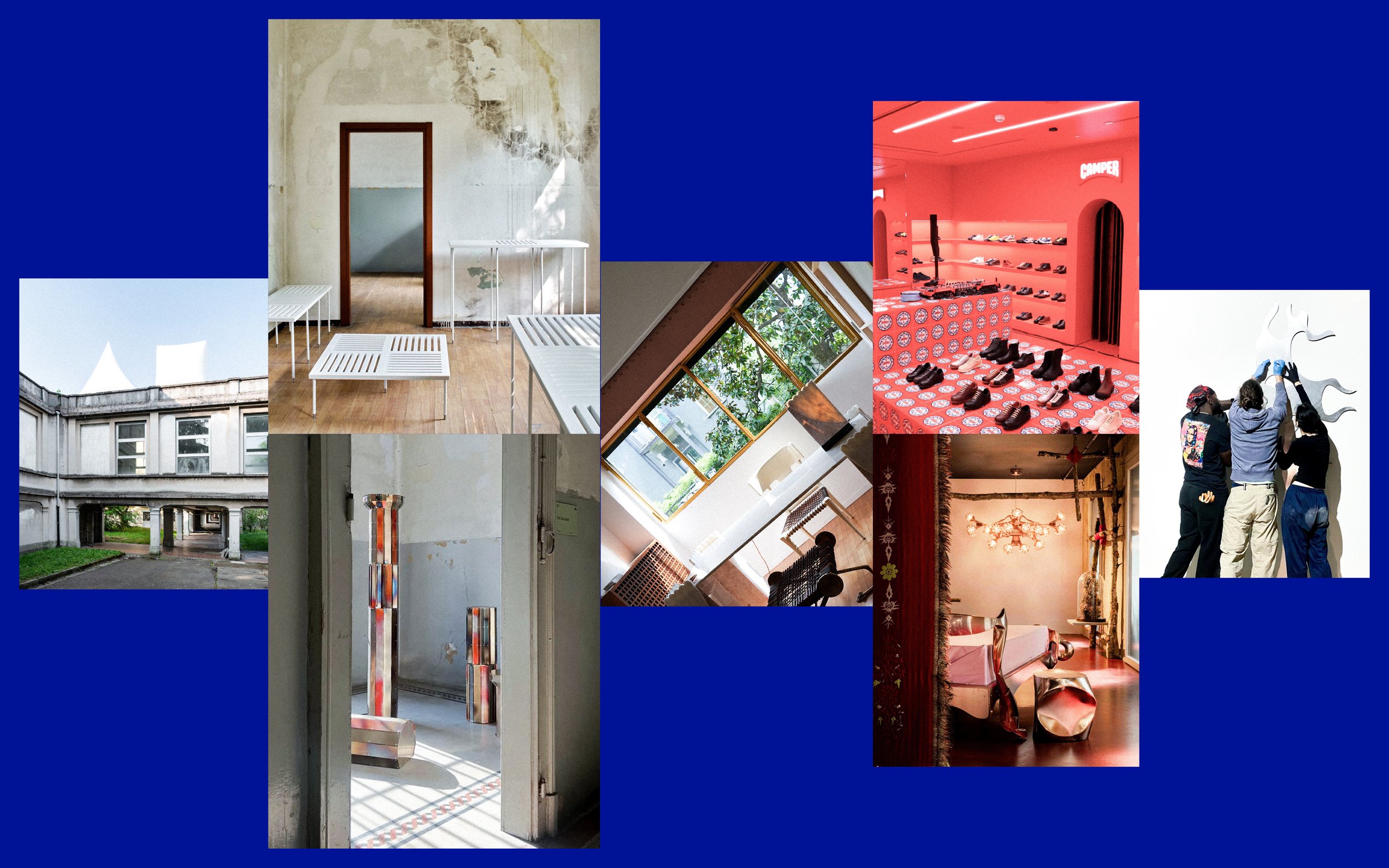
Something shifted in 2026. Loudly, unapologetically, confidently, with a kind of energy that feels less like a trend and more like an arrival. Greek designers showed up in Milan, Copenhagen, Corsica and Istanbul as voices that the international design world was actively seeking out. The why is not complicated: years of economic precarity forced a generation to build practices on resourcefulness, cultural depth and a relationship with materials — marble, light, mythology, the ancient and the immediately present — that no design school can teach. Greece has always had the vocabulary and in 2026, it finally has the stage.
Objects of Common Interest
Eleni Petaloti and Leonidas Trampoukis of Objects of Common Interest (OoCI) are by now veterans of Alcova, but 2026 found them operating at a new scale entirely. At the Baggio Military Hospital, their Hard Feelings inflatable public installation occupied the site with the kind of physical generosity that only inflatables can achieve: big, immediate, impossible to walk past. Simultaneously, they were inside Nilufar Grand Hotel at Nilufar Depot with Opening Volumes of Stillness, and over at Valextra’s Via Manzoni flagship with Soft and Tender Topographies — glossy black inflatables squeezed into the windows alongside Greek marble, cradling limited editions of the iconic Iside bag. Three simultaneous presences in one Design Week. OoCI have arrived and they are everywhere.
Argyro Pouliovali (ARP)
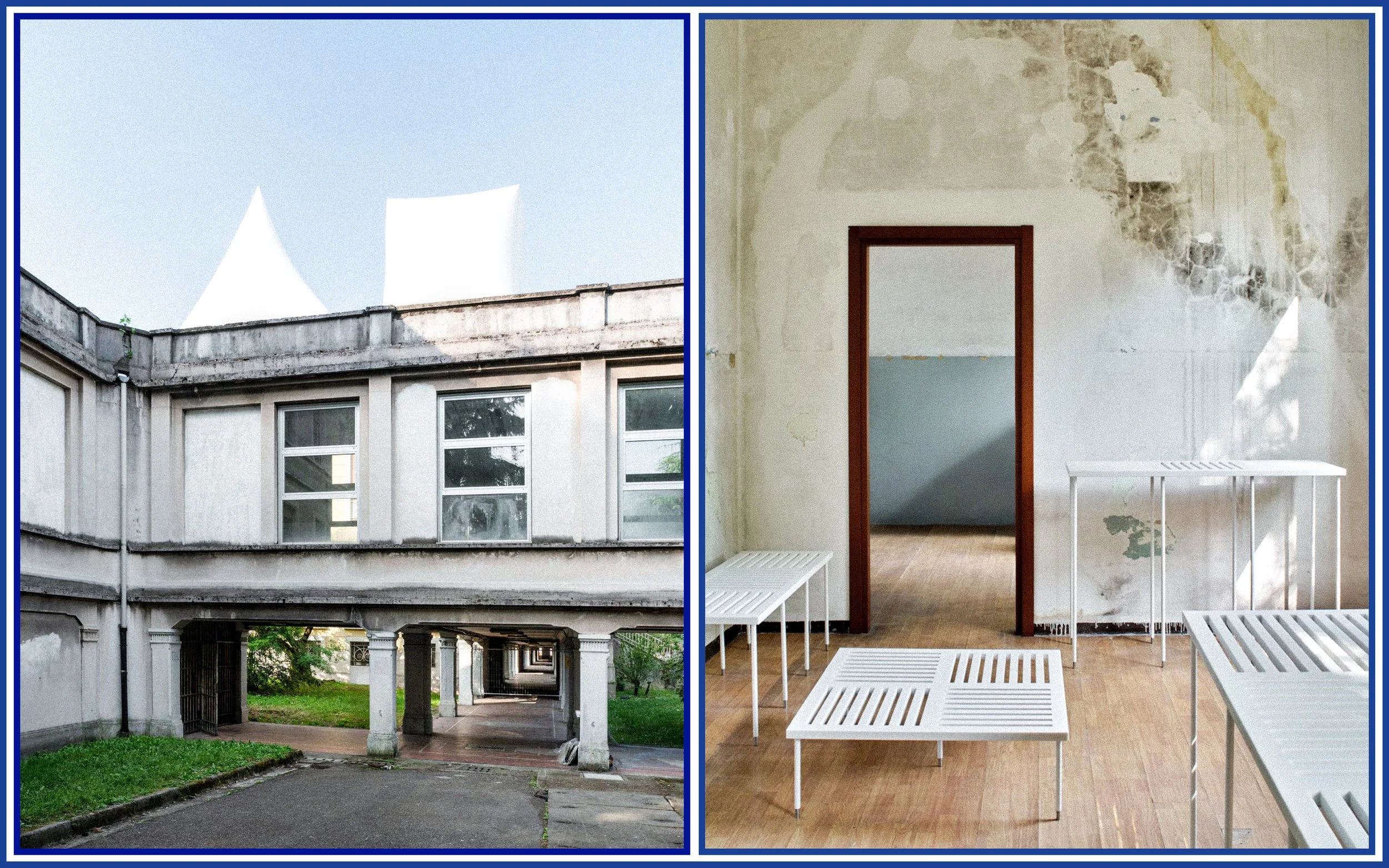
Argyro Pouliovali has never been in a hurry. Since founding ARP in Athens in 2014, she has built a practice defined by what she calls the essentials — light, flow, proportions — and a “cofident” refusal to add anything unnecessary. At Alcova Milano 2026, she brought tables: objects that distilled everything ARP stands for into their most concentrated form. Furniture has always been part of her practice, but here it declared itself with new confidence — not as an architectural side note but as a complete argument. Argyro Pouliovali, already named in Europe’s 40 Under 40 and Wallpaper*’s Architects’ Directory, is one of those rare designers who makes you feel the intelligence of restraint.
Theo Galliakis
Theo Galliakis had a big spring. First Alcova Milano, then Copenhagen for 3 Days of Design with Deoron — the multi-disciplinary platform that landed at Papirøen’s post-industrial Paper Island with over fifty designers and a sculptural sound system running all day. Being part of Deoron’s Copenhagen moment was significant: Deoron has become one of the most interesting curatorial bets in contemporary design, and Theo Galliakis’s presence alongside it placed him firmly in a conversation that stretches well beyond Greece. Two major design events in one season is not luck. It is momentum.
Made by Astronauts
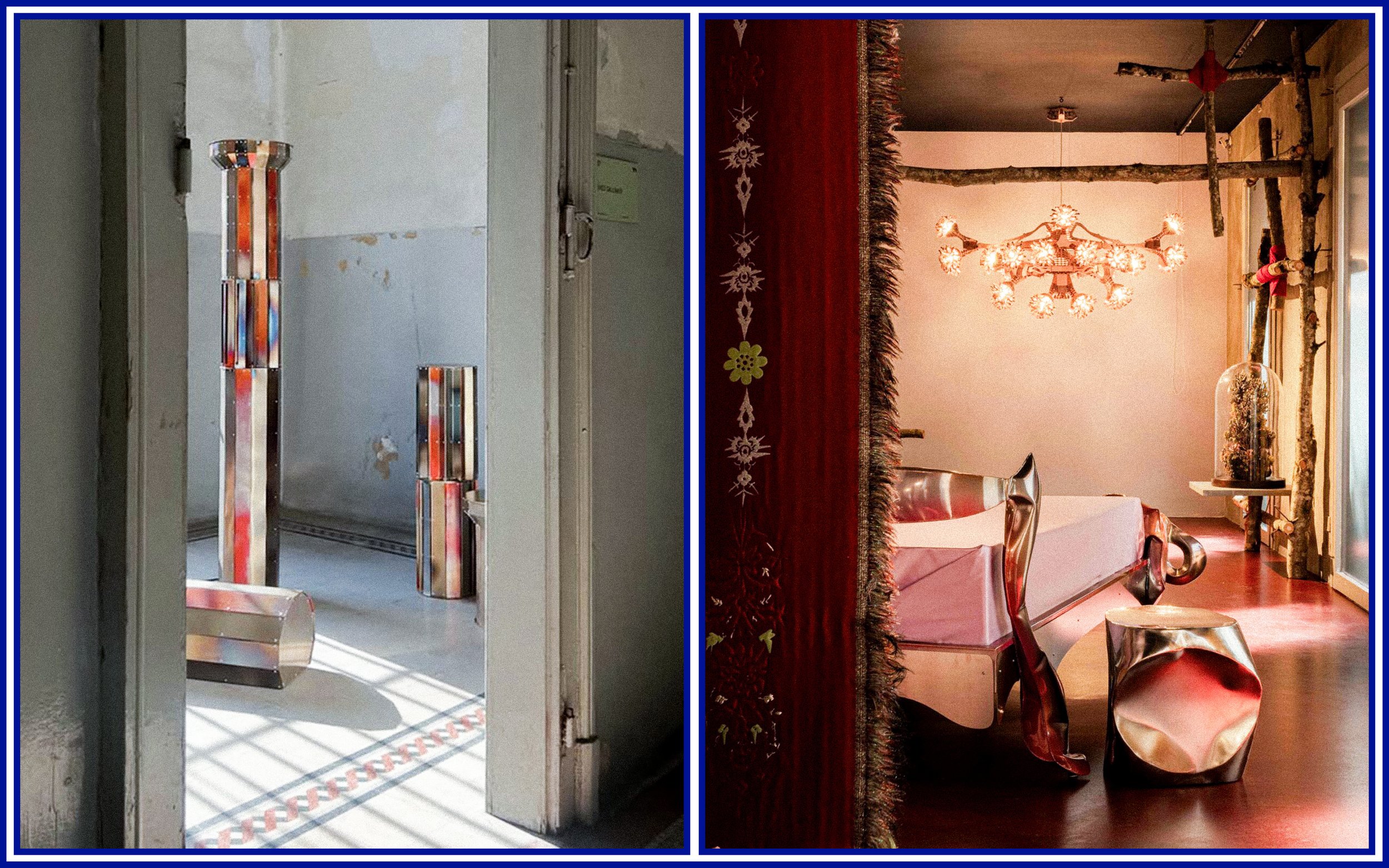
Danae Dasyra and Joe Bradford of Made by Astronauts arrived at Milan Design Week 2026 through the most prestigious door available: Nilufar Gallery, Nina Yashar’s legendary space that has been one of the defining forces of collectible design for over four decades. Their Agnes bed explored the charged histories of femininity through hydroformed geometries — suspended somewhere between dream and ritual, between the body and the uncanny. Nilufar doesn’t discover designers by accident. When Nina Yashar puts something in her space, she is making a statement about where the future of design is headed. In 2026, that future included an Athens studio working with mythology, magic and metal.
Kiki Goti
Villa Pestarini is one of Alcova’s two 2026 venues — and it is where Kiki Goti showed up for what may be the collaboration of the season: a joint project with Saridis of Athens, the legendary Greek furniture manufacturer with over a century of craft history behind it. The pairing of a young, internationally-minded designer with one of Greece’s great making traditions is exactly the kind of move that produces something neither party could achieve alone. Kiki Goti’s work has always carried a rigour that belies its apparent simplicity; Saridis brings the weight of real craft knowledge. Together at Villa Pestarini, they made the kind of argument that only Greece can make: that the past is our greatest resource.
Savvas Laz
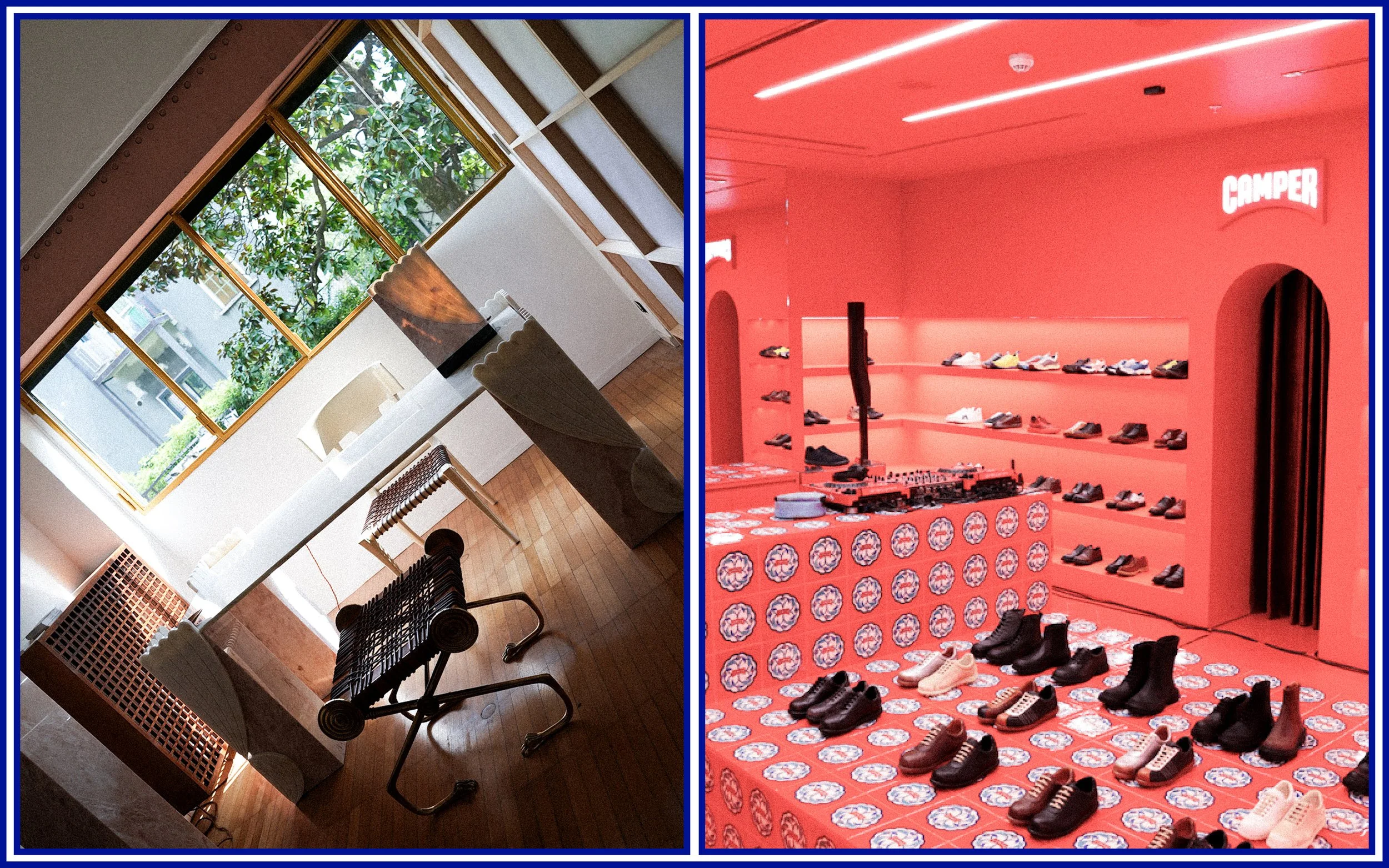
While his contemporaries were navigating the Design Week circuit, Savvas Laz was doing something different: opening a Camper store in Turkey. The collaboration with the Mallorcan footwear brand — one of design’s most consistently interesting long-term bets on emerging talent — positioned Savvas Laz not only as a designer, but also as a spatial thinker whose sensibility translates across cultures and contexts. Camper has always understood that a store is a manifesto, not just a retail space. Trusting that manifesto to a Greek designer in Istanbul is a statement about where the brand sees its future — and, by extension, where the design world sees Greece.
Niki Danai Chania
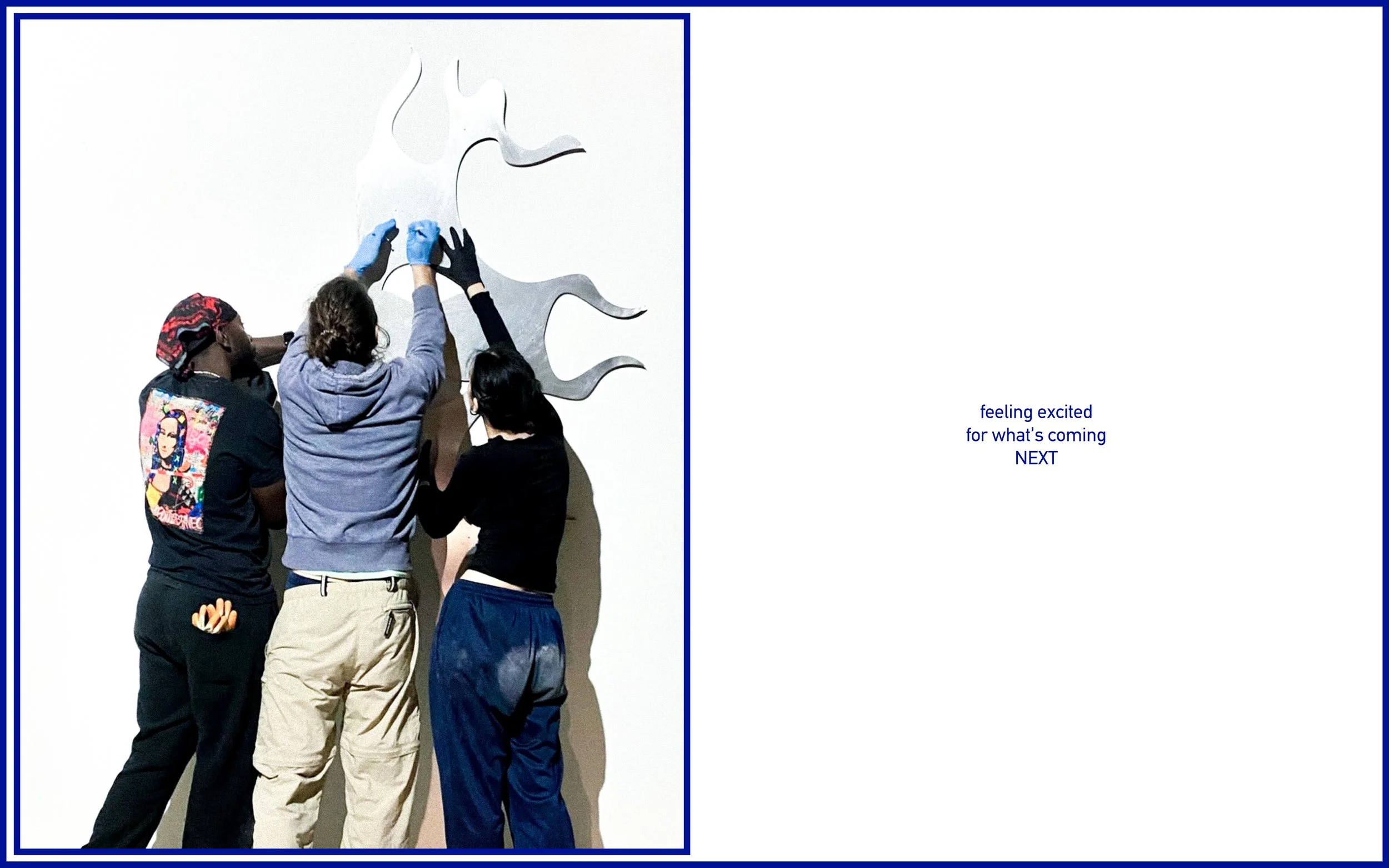
Niki Danai Chania went to Corsica — to a Biennale, crossing over into art with the kind of move that designers make when they are ready to ask bigger questions. The Corsica Biennale is not the obvious next step for a designer building an international profile; it is precisely the less obvious choice that makes it interesting. Chania’s leap into art territory signals a practice unwilling to be contained by category — and in 2026, that ambition feels entirely in tune with a generation of Greek creatives who are rewriting what it means to work from Athens.